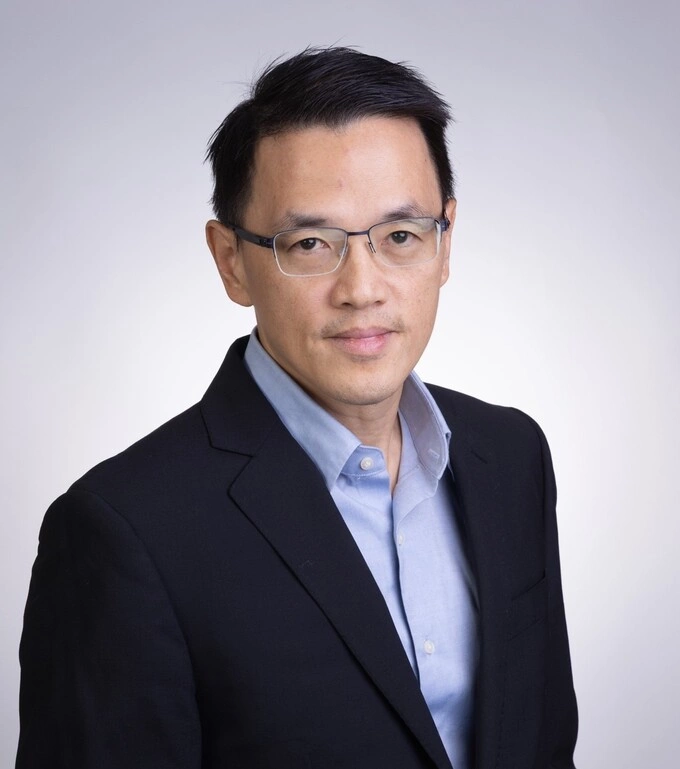
Shyue Ping Ong
Materials Informatics
RESEARCH FIELD
Materials Science
Data Science
Artificial Intelligence
Education
University of Cambridge
B.S.
Electrical and Information Sciences
,
1999
University of Cambridge
M.S.
Electrical and Information Science Engineering
,
1999
Massachusetts Institute of Technology
Ph.D
Materials Science and Engineering
,
2011
Summary
Shyue Ping Ong is a Singaporean materials scientist and a pioneer of AI foundation potentials — machine learning models that simulate atomic interactions across materials — who left the University of California, San Diego after nearly two decades in the United States to join the National University of Singapore (NUS) in January 2026 as Provost's Chair Professor in the Department of Materials Science and Engineering, recruited under Singapore's Returning Singaporean Scientists Scheme.
Ong earned a BA and MEng in electrical and information sciences from the University of Cambridge in 1999, then spent six years in the Singapore government, working across the ministries of finance, health, and transport, before leaving a six-figure salary in 2006 to pursue a PhD in materials science and engineering at MIT under Gerbrand Ceder, completed in 2011 on an income of under $30,000 a year. He joined UC San Diego's Department of Chemical and Nano Engineering as an assistant professor in 2013, earned tenure in 2017, and became a full professor in 2021, leading the Materials Virtual Lab. He founded and led development of pymatgen, a widely used open-source materials analysis library, was a core contributor to the Materials Project database of computed material properties, and developed M3GNet, a universal machine-learning interatomic potential spanning 89 elements, along with the MatPES foundational potential-energy-surface dataset. His honors include the US Department of Energy's Early Career Research Program Award (2014), the Office of Naval Research Young Investigator Award (2015), and continuous recognition as a Clarivate Highly Cited Researcher since 2021.
At NUS, Ong leads the Materialyze.AI Lab and has established an AI Foundry connecting artificial intelligence, scientific data, and automated experiments to accelerate materials discovery, with initial focus areas including high-entropy alloys and ceramics for fusion energy and aerospace applications.
Before turning to science, Ong was on track for a government leadership career, having become part of Singapore's Administrative Service after graduating from Cambridge. At 29, despite never having formally studied materials science, he applied to graduate programs at MIT and Stanford; MIT accepted him. "I was never meant to be a scientist," he wrote on LinkedIn shortly before his return to Singapore, reflecting on his 2006 decision to trade a six-figure salary for a graduate stipend: "I traded job and financial security for intellectual fulfillment. I bet on my ability to adapt and grow."
NUS, which Ong credited with "making bold investments in AI for science," was ranked 10th globally — Asia's highest — in the 2027 QS World University Rankings released in June. He said the AI Foundry's methods could eventually extend beyond its initial fusion-energy and aerospace materials focus to semiconductors and clean energy, though he cautioned that AI needs to do more than simply identify promising candidate materials. Reflecting on having left a secure career twice — first Singapore's civil service, then tenure in the US — he wrote: "Growth rarely comes from playing it safe. The moments that define us often begin with discomfort, uncertainty, and the courage to walk away from what is merely working in pursuit of what truly matters." His ambition is long-term: "My hope is that in 10 years, when people ask where the world's best materials are designed, Singapore is part of the answer."
CURRENT AFFILIATION
National University of Singapore
shyue@nus.edu.sg