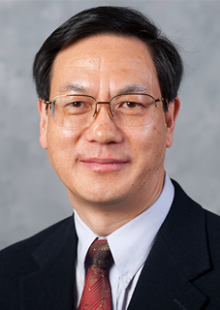

Fengyi Wan
Gut Microbiology
RESEARCH FIELD
Gut Microbiology
Immunology
Microbiome
Cancer Biology
Education
Wuhan University
B.S.
Biochemistry and Molecular Biology
,
1999
University of Chinese Academy of Sciences
Ph.D
Biophysics
,
2003
National Institutes of Health
Postdoc
Postdoctoral research
,
2004
-
2010
Summary
Fengyi Wan is a gut microbiologist and immunologist who studies how gut microbes and the immune system interact to drive inflammation and colon cancer. He rose from assistant to full professor at the Johns Hopkins Bloomberg School of Public Health before moving to China in October 2026 to become a chair professor at Zhejiang University in Hangzhou, based at a national laboratory within the university's Second Affiliated Hospital.
Wan graduated from Wuhan University in 1999 and earned a doctorate in biophysics from the Chinese Academy of Sciences in 2003. He moved to the US in 2004 for postdoctoral research at the National Institutes of Health, where he worked until 2010 before joining Johns Hopkins.
During his US career, Wan led more than 20 research projects supported by institutions including the NIH and published nearly 60 scientific papers, according to Zhejiang University. Federal funding records show his laboratory received more than US$4.7 million in NIH research grants between 2011 and 2025. At Zhejiang University's Second Affiliated Hospital he is now affiliated with a national laboratory that conducts research into medical devices implanted in blood vessels.
At Johns Hopkins, Wan was professor of biochemistry and molecular biology and received the 2023 Shikani/El-Hibri Prize for Discovery and Innovation, which recognizes a Bloomberg School basic science investigator for a major contribution with significant potential for public health or clinical impact. His research examines how interactions among host cells, the gut microbiota and pathogens in the colon affect health, with a focus on cancer.
The prize recognized a 2022 study in Cancer Discovery showing that certain bacterial infections can raise the risk of colon cancer in mice even when the infection is only transient. His lab found that the increased risk depends on a toxin, UshA, secreted by the bacteria, which damages the host's DNA. Enteropathogenic and enterohemorrhagic E. coli (EPEC and EHEC), common causes of transient diarrheal disease in humans, also secrete the toxin. Gregory Kirk, vice dean for research at the Bloomberg School and a member of the selection committee, said the committee hoped the discovery could shift understanding of pathogen-host interactions and eventually lead to ways to control colon cancer.
CURRENT AFFILIATION
Zhejiang University, Hangzhou, China