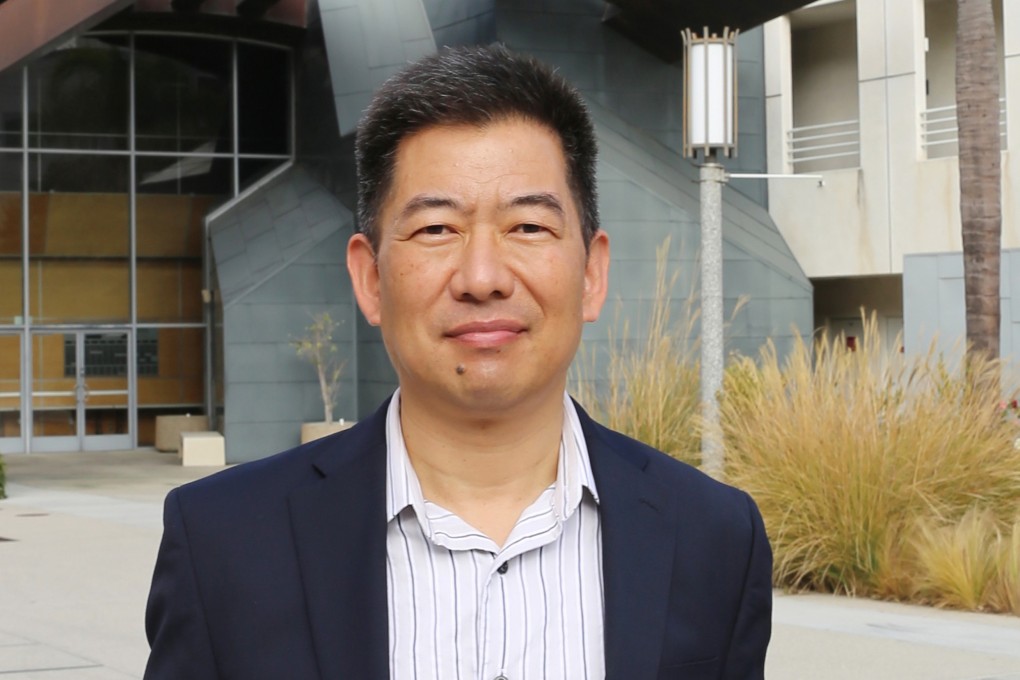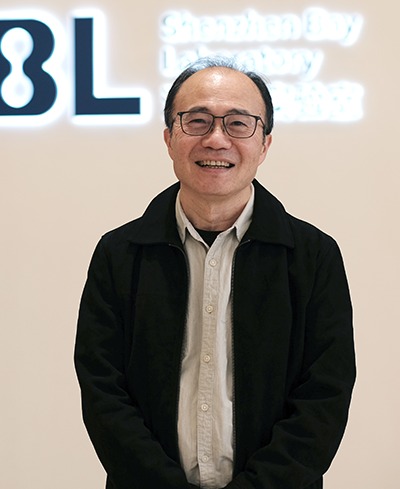
Gensheng Feng
Cancer Biology
RESEARCH FIELD
Cancer Biology
Viral Immunology
Cancer Immunotherapy
Education
Hangzhou University
B.S.
Biology
,
1982
Second Military Medical University
M.S.
Immunology
,
1985
Indiana University Bloomington
Ph.D
Molecular Biology
,
1990
Summary
Feng Gensheng is a distinguished cancer scientist who returned to China in August 2025 after 40 years in North America, joining the Shenzhen Bay Laboratory (SZBL) as Director of the Cancer Research Institute. He was previously a Distinguished Professor of Pathology and Molecular Biology at the University of California, San Diego (UCSD), where he spent the majority of his career.
Feng earned his BSc in Biology from Hangzhou University, an MSc in Immunology from the Second Military Medical University in Shanghai, and his PhD from Indiana University Bloomington. He completed postdoctoral training at the University of Toronto under the late Tony Pawson, where he discovered the SH2-containing tyrosine phosphatase Shp2 (originally named Syp) — a novel enzyme that regulates protein stability and signalling activity across cell types. Over the following three decades, his lab has been at the forefront of decoding how Shp2 drives signalling through the RTK-Ras-Erk pathway, a body of work that also led to his discovery of the intercellsome, a new type of vesicle involved in cell-to-cell communication.
Feng has authored 193 peer-reviewed papers, reviews, and book chapters, and has served on the editorial boards of Molecular and Cellular Biology, Journal of Biological Chemistry, Hepatology, and Journal of Hepatology. He was elected a Fellow of the American Association for the Advancement of Science (AAAS) in 2016, and serves as president of the Association of Chinese Americans in Cancer Research (ACACR) and president-elect of the Society of Chinese Bioscientists in America (SCBA). At SZBL, his research focuses on the mechanisms of liver cancer recurrence and combinatorial immunotherapy strategies that coordinate innate and adaptive immune cells against liver cancer.
CURRENT AFFILIATION
Shenzhen Bay Laboratory
fenggs@szbl.ac.cn